Okay, so check this out—I’ve spent years poking around DeFi stacks and wallets, and one thing keeps nagging at me. Hmm… somethin’ about the way users trust UI without testing the plumbing. Whoa! The gut says: if a wallet makes approval flows feel smooth, people will approve almost anything. That instinct is scary. But then I dove into logs and transaction traces and realized the problem is less about malice and more about context—a mismatch between what users see and what smart contracts actually do.
Seriously? Most wallets still show only a high-level prompt. They show « Approve » and « Confirm » like it’s a restaurant menu. Medium-length sentences can explain, but the UI rarely does. Here’s the thing. Transaction simulation and detailed risk assessment change that dynamic. In practice, simulating a call before you send it reduces surprises. Initially I thought that simulation would be overkill for casual users, but then I watched non-technical traders avoid rug pulls once they could see token transfer vectors. Actually, wait—let me rephrase that: not everyone will run sims, though power users definitely do, and their behavior shapes liquidity and trust on-chain.
On one hand, dApps want frictionless onboarding. On the other hand, wallets need to enforce guardrails. This is a tension. My instinct said: lean on better UX, not hard blocks. But deeper analysis shows a hybrid approach works best. You can warn loudly, and block certainties. You should also offer granular revokes and nonce queuing. Hmm… it’s like trying to build a seatbelt that also tells you when the road’s slick.
Where integration goes wrong
Most integrations are superficial. They wrap Web3 calls in a shiny modal and call it a day. That bugs me. Developers often assume that wallet prompts equal consent. They don’t. Short sentence. The result is users approving token allowances that are effectively unlimited, or signing batched transactions that mint NFTs or move funds in ways they didn’t expect. On the surface it looks fine, but when you unpack the calldata, the pattern is obvious—reentrancy vectors, approval sweeps, and hidden beneficiary addresses. Wow. This is not theoretical. I’ve traced real incidents where a single unchecked approval turned into a complete balance drain.
Here’s a practical split. Medium sentences can outline specifics. First, dApp-to-wallet APIs must expose intent—what contract will be called and why. Second, wallets should simulate the transaction off-chain to show possible state changes. Third, users need accessible explanations—plain English summaries plus raw calldata for power users. On one hand that sounds heavy. Though actually, if you design it right, it fits under a single confirmation UI with expandable layers.
How advanced wallets help — and what I like about rabby wallet
I want to be honest: I’m biased toward wallets that bake simulation into the signing flow. The reason is simple. Simulations give you an early failure mode. They reveal token transfers, unexpected approvals, and gas anomalies before anything touches the mempool. My first impression was that simulations slow people down. But after watching traders save millions in aggregate by refusing risky calls, my stance flipped. Something felt off about wallets that didn’t do this. They were like cars without dashboards.
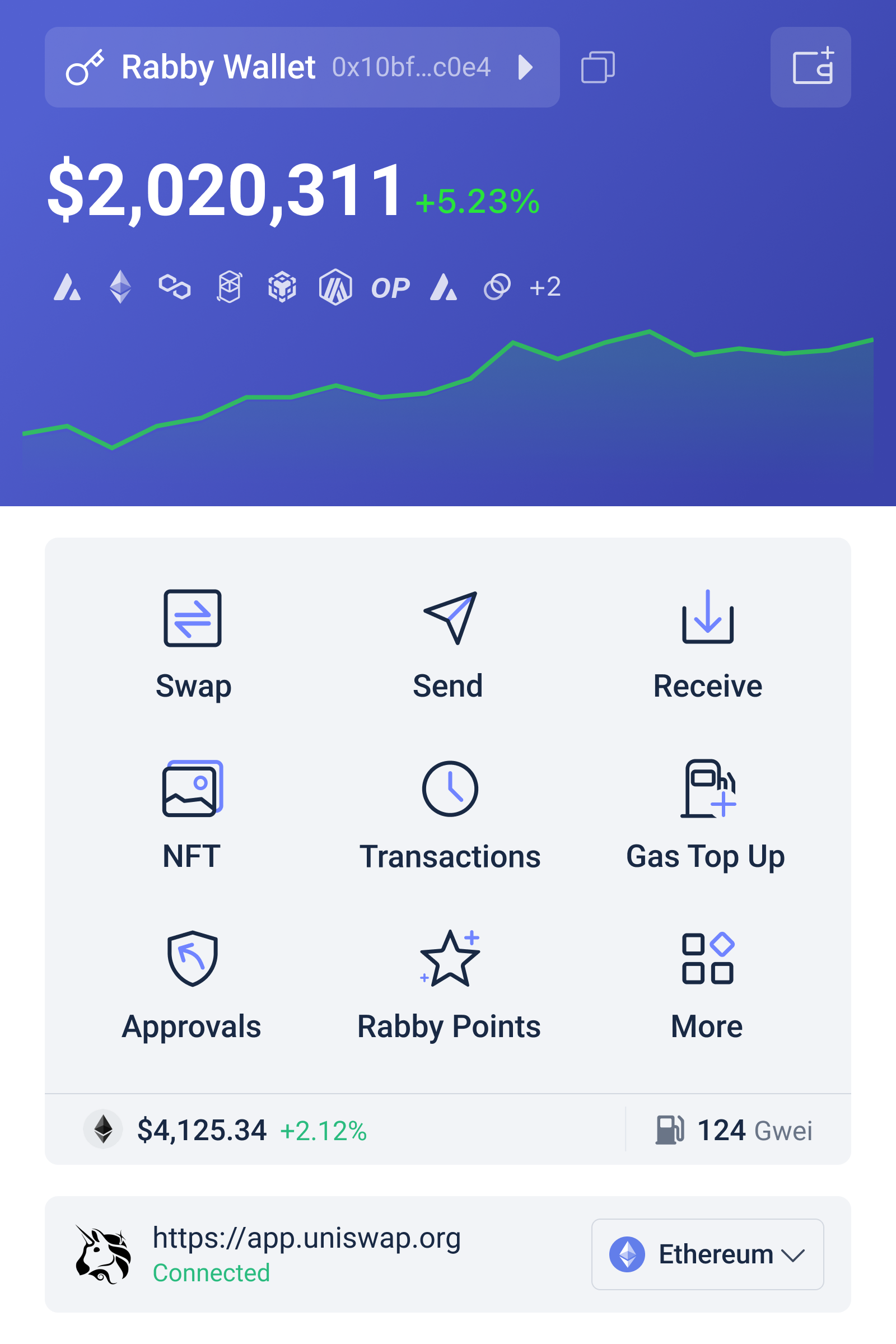
Okay, real talk. rabby wallet integrates transaction simulation and permission management in a way that feels natural. It surfaces the who, the what, and the how much—without being condescending. I’m not saying it’s flawless. No tool is. But for DeFi users who care about risk assessment, it’s one of the more pragmatic choices today. Seriously? Yes.
One concrete pattern: when a dApp asks for an allowance, the wallet shows a simulation of the maximum potential token outflow and highlights if the receiver is a contract with a history of draining funds. Medium sentences here explain why that matters. Contracts can be proxies. They can have delegatecall paths. Seeing the potential flow in a simulated state often triggers a « no » that would otherwise not happen.
Design principles for robust dApp-wallet integration
Start with intent. Short sentence. Define what the dApp intends to do and attach a machine-readable intent object to the transaction request. Medium explanation: include method signatures, targeted state changes, and optional human text that maps to those signatures. Then show both. If you do only one, you’re leaving users in the dark.
Simulate every non-trivial call. Yep. Run the call against a node or a light simulation engine and present the deltas. Longer thought: that simulation should include token transfers, approvals created or modified, contract calls triggered by the primary call (breadth-first), and potential reentrancy loops—basically the attack surface. Trace outputs are the best. I once watched a simple « mint » call cause a series of nested transfers that ended with funds leaving the user’s account via a router contract; the simulation caught it. That moment changed my approach to developer tooling.
Introduce graded warnings. One sentence. Not all warnings should block. Medium-bit: warn for high-risk patterns, like approvals to unknown contracts, approval amounts exceeding thresholds, or contracts without verified source code. For high-confidence threats—like a contract on a blacklist or a signature for a known drain—block or require an additional explicit step. Users hate friction, but they hate losing funds more. There’s a balance.
Developer ergonomics — make secure the easy path
APIs should be simple. Short. Developers shouldn’t need a PhD to integrate security. Provide a standard schema for transaction intent, and easy-to-call SDKs that present optional simulation hooks. Medium sentences: allow dApps to mark transactions as « informational » or « sensitive » and let wallets surface them differently. For example, a swap is informational, while a permit+transfer combo is sensitive. Longer: integrate heuristics that detect chained approvals—if a dApp plans to batch approvals and transfers, the wallet should flag it and ask for stepwise confirmation, not blind acceptance.
Remember developer education. Two quick points. First, add tutorials showing how to sign minimally privileged allowances. Second, bake in examples of safe flows and anti-patterns. Developers copy patterns. If the reference implementations are secure, app behavior improves across the board.
FAQ
How does transaction simulation actually reduce risk?
Simulation exposes potential state changes before execution. It shows token movements, newly created allowances, and contract calls that could siphon balances. In short: it moves the risk assessment from after the fact to before. That simple pivot reduces surprise drains. I’m not 100% sure it stops social-engineered approvals, but it gives users factual evidence to question a prompt.
Won’t heavy warnings scare away users?
Yes, if they’re poorly designed. Warnings should be graded and contextual. Use plain language, show the numbers, and provide actions: revoke, adjust allowance, or cancel. And offer a « Tell me more » path for curious users. People respond better to clear, concise info than to alarmist red screens—true story.